Tag Archives: Circular 331

Guide: First VC Meeting

Written by

shutterstock_196379804

Entrepreneurs often seek out venture capitalists (VCs) to seek early stage fundraising for their startup. The process of finding the right VC for their startup, getting through the door, and leaving an impression often proves challenging. Below is a set of guidelines to prepare every entrepreneur seeking funding:

Find the right VC: Do your research and focus on identifying firms who prefer to invest in your stage, industry and technology. Avoid presenting to investors who don’t understand your industry and technology.

Request a meeting: Send the VC an email requesting a meeting that includes your elevator pitch and your presentation attached. This gives the VC the chance to go through your decks and think of it and do the required research ahead of meeting you.

Who should attend: The CEO must attend the meeting and can be joined by a co-founder, if one exists, and one or 2 valuable team members provided that they are good with people and all have a role to play at the meeting.

Presentation: Make sure you have prepared a great deck and rehearsed your delivery as well as how to reply to potential questions before attending the meeting. Do not deliver an overly detailed and lengthy presentation. It is crucial to deliver the perfect pitch, with confidence, passion, and knowledge. Check our post on what your presentation should include and how to deliver the perfect pitch.

Experience: Highlight your relevant past experience and those of your key team members. This helps the VC to decide whether you and your team are capable of implementing the next steps.

Time management is critical. Spend a fraction of the time focused on your presentation and postpone all questions until afterwards. The remainder of the time would be used for discussions. If you are not prepared and focused, the VC will take over the pace of the meeting and lead the discussions.

Don’t expect to get funded: Don’t try to use the first meeting to get funded as soon as possible by throwing in all sorts of information during the initial meeting. What you should be looking for is a request for a next meeting. Usually, VCs would study your presentation and discuss it with their team and would then contact you for a follow-up meeting.

After the meeting: Email the VC after the meeting to thank them for the time and attention they gave you. Do not pester them by constantly calling afterwards. They would get back to you. You can politely call or email a week or two after your initial meeting to follow up.

The intent of a first meeting with a VC is for them to explore if the opportunity you offer is interesting enough for their firm to seriously consider as an investment opportunity. If you have left the meeting with the VC informed on what you do, how you do so, your customer base, your marketing strategy and financial overview, you would have succeeded. Remember, you might never get the chance to meet this VC again, be prepared!

For a better understanding on what VCs look for, read our post on How To Attract Investors.

The Benefits of Entering a Startup Competition

Written by

shutterstock_134149385

Entrepreneurs can achieve a lot by competing in startup competitions, even if they don’t win. A primary motivator for startups to enter competitions is usually the chance to acquire additional funding. However, the benefits of entering a competition, let alone winning, are myriad.

Validation:
Usually, the companies/organizations that host startup competitions are the foremost leaders in their fields. When you are selected by them to pitch at their competition, this adds to your reputation with a third-party validation.

Exposure:
The companies/organizations that host startup competitions usually tend to have a strong PR arm. It’s great publicity. If you win you will get a great amount of exposure and recognition, and even if you don’t win, your name will still get out there in the media. These competitions are designed to bring investors and entrepreneurs under one roof so you would also get your name out there to top industry names.

Networking:
As mentioned, the people who attend these competitions are seasoned investors, mentors, and entrepreneurs. It is a great way to meet them and expand your professional network locally and globally; you would also meet and interact with peers who have faced your current challenges. These relationships may be able to help you grow and develop your startup, gain investors, meet a mentor, and keep you in the loop on what’s happening in your field.

Feedback:
When pitching your idea to an audience, you gain the opportunity to receive valuable feedback from prospective investors and clients on your startup, providing you with knowledge on how you can adapt or develop your idea further.

If you have a startup and these benefits have enticed you to participate in a competition, apply to compete at the BDL Accelerate 2015 Early Stage Startup Competition before November 9th. You can read all about the additional benefits of competing and all the BDL Accelerate 2015 stats.

Map of Lebanese Startup Ecosystem

Written by

A startup ecosystem is formed by several components interacting as a system to create and sustain startup companies. As Lebanon’s startup ecosystem has been thriving with the rise of more startup companies, dedicated investors, accelerators, educational institutions, and more, we have created the map of the current startup ecosystem in Lebanon overviewing all the components and major players.

chart---lebanon

Paul Bragiel – i/o Ventures

Written by

Blog-template-partner

Paul Bragiel
i/o Ventures, Co-Founder & Managing Partner

Paul Bragiel, is a ‘jack of trades’ superstar in the tech industry world. Paul, an entrepreneur, investor, speaker and aspiring athlete is Co-Founder and Managing Partner of i/o Ventures and previously founded 3 companies and served as their CEO; Lefora, a product that revolutionized online forums, Meetro the first location based social network, and Paragon Five, a game development studio.

i/o Ventures is a 3 month accelerator program for tech startups in Silicon Valley that invests up to $25K and only focus on 5 companies at a time, with a total of 10 to 12 companies a year. This means that they get to work real close with the selected startups that want to move to the next level, need to raise funds, and need guidance.

During the 3 months, the partners who come from companies like MySpace and BitTorrent, and mentors who come from companies like OpenDNS, Yelp, and Digg, coach and mentor the startups. Stationed from i/o Ventures offices, the startups focus on their product’s market readiness and meet other entrepreneurs. At the end of the 3 months, angel investors and venture capitalists come in and listen to what the company offers.

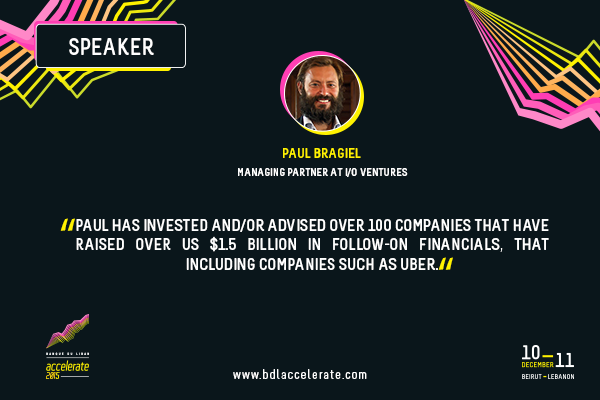
In addition to his in work in the US, Paul has also started funds in Africa as a Partner in Savannah Fund, in Eastern Europe as Co-Founder of GameFounders, and in Asia as Founding Partner at Golden Gate Ventures. Collectively,Paul has invested and/or advised over 100 companies that have raised over US $1.5 billion in follow-on financials, that including companies such as Uber. Also, during his spare time, Paul has been advising Estonia and Colombia on their technology and entrepreneurship policies.

Besides being known for his entrepreneurial and investing skills, Paul has also competed in the 2014 Winter Olympics on the Columbian Cross Country Ski team, a childhood dream of his, has canoed the entire Mississippi River and bicycled across the United States.

Paul is a true inspiration to people around the world to sometimes take risks to fulfill their dreams.

Jean Nehme – Touch Surgery

Written by

Blog-template-partner (4)

Jean Nehme
Touch Surgery, Co-Founder

Jean Nehme, a returning speaker to BDL Accelerate, is a Plastic Surgeon and the Co-Founder of Touch Surgery, a game-changing mobile surgical simulator. Jean has been aiding surgeons to improve their skills while overcoming the challenges of being an entrepreneur.

When he and Andre Chow were still residents at the Imperial College London, they realized that they lacked additional experience outside of the operating room. Surgical simulators already existed but were not within reach, as they were expensive and stored away from the residents. This is how the two friends came up with the idea for Touch Surgery. Surgeons around the world have free access to this tool that would help them be better prepared for their patients.

This simulator is as close to real life as it gets: Filled with accurate surgical content, it shows users what could happen during actual operations. Because it prepares students to all kinds of scenarios, Touch Surgery has considerably improved the way they are taught, and the quality of their surgery. The app gathers the latest surgical procedures from the best institutions, and allows medical students to feel more confident before entering the operating room.

Surprisingly, patients who want to understand a procedure before they go under the knife are also downloading Touch Surgery, marking a true revolution in the surgical world for all parties involved.

With Touch Surgery, Jean Nehme has played a vital role in transforming the medical world we know through a digital innovation that enhances doctors’ surgical skills, prepares trainees for the operating room, and educates patients. Touch Surgery is truly an app that has exceptional promise for changing the future of surgeries.

You can watch Jean Nehme and other Lebanese entrepreneurs share their startup success stories at BDL Accelerate 2014: